
Maame Ama carries her hypertension with a brave face, winces at each attempt to stretch her limbs, and then slinks back into her tattered sofa, her tired fingers clasping her National Health Insurance card. Truth is, she stopped renewing the card two years ago. Three consecutive visits to her local clinic yielded the same verdict: essential medicines out of stock.
For the past eighteen months she has managed her blood pressure with herbal preparations from a neighbourhood practitioner whose father treated her grandmother. She trusts him. Not that she has much of a choice but she certainly knows to be wary of the state.
It is unlikely that Maame Ama knows that neither the herbalist nor his remedies feature anywhere in the architecture of Ghana’s formal health financing machinery. Such knowledge only matters to book-long Accra people. And just as well, for the good of her BP, that she does not know that she falls through every net Ghana has woven in seven decades. Not a few nets, I might add, each grandly announced, each partially stitched, but none ever quite finished.
Her predicament is a compressed parable of something we have termed katanomics. The word is a portmanteau from the Greek kata (shatter) and nomos (governance). In katanomic democracies, citizens take voting very seriously, journalists jump on each new controversy as if this time it will matter, projects launch with presidential pomp, and yet the underlying systems steadfastly refuse to learn from their own wreckage time after time. There is a sense of political accountability but very little by way of policy accountability. Spectacle is trailed by collapse, collapse by amnesia, and amnesia by a fresh spectacle.
Ghana’s tormented quest for universal health coverage, and its parallel inability to welcome traditional medicine through the front door of formal care, together compose a truly fitting tribute to the katanomic phenomenon.
This Content Is Only For Subscribers
Down with Cash & Carry
At independence in 1957, Ghana ran a tax-funded healthcare system that charged patients nothing at the point of service. For a hopeful interlude, it worked. Then the economy shuddered, and health competed for revenue against every other hungry ministry. In the decades that followed, budget execution itself became unreliable.
The 2016 policy framework later acknowledged with evident regret how the country seems to perennially struggle to fence off tax revenue for health spending. By 1985, user fees arrived. By 1990, drugs were charged at full cost under the dreadful moniker of “Cash and Carry.”
Keeping in lockstep with this policy decay was health quality itself. Between 1973 and 1987, annual hospital attendance crashed from roughly eleven million to five million, even as the population grew. An ILO analysis estimated that eighty per cent of Ghanaians needing healthcare at any given moment simply could not pay. Cash and Carry seemed to have both failed to raise sufficient revenue and condemned millions of sick Ghanaians to a certain death, the worst kind of failure imaginable.
When the National Health Insurance Scheme finally materialised in 2003 under Act 650, it bore the markings of a political rescue mission. President Kufuor’s administration declared Cash and Carry dead. The replacement pooled risk through a 2.5 per cent health levy on VAT, a 2.5 per cent deduction from formal-sector social security, and individual premiums. District Mutual Health Insurance Schemes (seeded by community experiments stretching back to a pioneering scheme in Nkoranza, Brong Ahafo, in 1989) would form the grassroots spine.
And for a season, the NHIS delivered. By 2009, active membership had rocketed from 2.4 million to 11.1 million. Outpatient visits surged from under two million in 2005 to 27.35 million by 2013. The scheme covered over ninety-five per cent of diseases commonly reported in Ghanaian facilities. For millions of citizens, the NHIS felt like a covenant honoured.
The Katanomic Odds Always Prevail
But here is the twist that katanomics anticipated. Beneath the triumph, structural fractures had been quietly spreading since 2009, barely six years after launch. A World Bank study laid the pathology bare: claims expenditures ballooned from GH¢7.6 million in 2005 to GH¢1.1 billion by 2014. The annual deficit hit GH¢300 million. The scheme’s investment fund, its only shock absorber, plunged from GH¢447 million (nearly fifteen months of claims cover) in 2009 to GH¢100 million (barely one month’s worth) by 2014. The NHIA borrowed over GH¢100 million and began delaying reimbursements to providers, triggering a cascade of distrust that echoes in clinic corridors to this day.
Crucially, the World Bank uncovered design defects that a serious policy audience would have flagged years earlier. Adverse selection ran rampant: only 42 per cent of members enrolled in January 2014 were still in the scheme twelve months later, suggesting citizens joined when sick and vanished once treated. Fee-for-service incentives rewarded volume over value. And the claims-processing apparatus was so primitive that hospitals submitted data in incompatible Excel formats – with no standardised column headings. There was no routine mechanism for the NHIA even to confirm whether a patient had received the service billed under their name.
More fundamental though is the fundamental character of the policy itself, its inherent rationale.
There is a foundational oddity about the NHIS that rarely surfaces in the national conversation, yet it colours everything that followed. The World Bank found that the NHI levy – a surcharge on VAT – provides 74 per cent of the scheme’s revenue. SSNIT deductions add another 20 per cent. Actual premium income from individual subscribers? Three per cent. By 2024, parliamentary records placed the combined tax-based share at 94.92 per cent.
Ghana is, as the World Bank itself observed, the only country on earth to finance a “health insurance” scheme primarily through consumption tax. Strip away the branding and what remains is a tax-funded entitlement programme dressed in the language of insurance. That semantic disguise carries significant consequences. Because the word insurance implies a contract between contributor and fund, it creates expectations of service quality and entitlement that a thinly resourced tax transfer was never designed to honour. And because revenue is pegged to VAT collection rather than to the number of enrollees, expanding coverage does nothing to expand the money available to pay for it. The scheme was, from its very architecture, a fiscal time-bomb with a reassuring label. Only katanomics can explain how a country can for years continue to describe something as “insurance” when it is anything but.
By 2021, a World Bank review of Ghana’s progress towards Universal Health Coverage delivered a finding that in less katanomic societies would have made headlines: the share of NHIS revenue devoted to actual claims reimbursement had fallen from 85.3 per cent in 2009 to 59 per cent in 2021. The remaining funds were consumed by operational costs, IT systems, biometric card procurement, and – most strikingly – discretionary transfers to the Ministry of Health to plug its own funding gaps. The NHIS, built to pay for patient care, was being cannibalised to subsidise the broader health bureaucracy. And Ghanaian patients stoically bore the cost at the counter.
In katanomic terms (“politics aggregates, policy disaggregates”), here was the prism analogy at work. Politics had aggregated a magnificent narrative (universal coverage, an end to Cash and Carry, and healthcare as a right) and fired it into the public imagination as a single beam of light. Policy, however, disaggregated that beam into a thicket of actuarial calculations, provider payment models, fraud detection protocols, and tariff schedules demanding sustained, technically literate vigilance from what katanomists call critical policy audiences. Those audiences – think tanks dissecting claims data, journalists following the money trail past the press conference, and parliamentary committees auditing reimbursement timelines – were too few, too fragmented, too poorly funded, and thus too diffused to maintain pressure across electoral cycles. Each new government inherited the NHIS’s structural wounds, dressed them in fresh rhetoric, and pressed forward.
April 2026: Another Act Opens
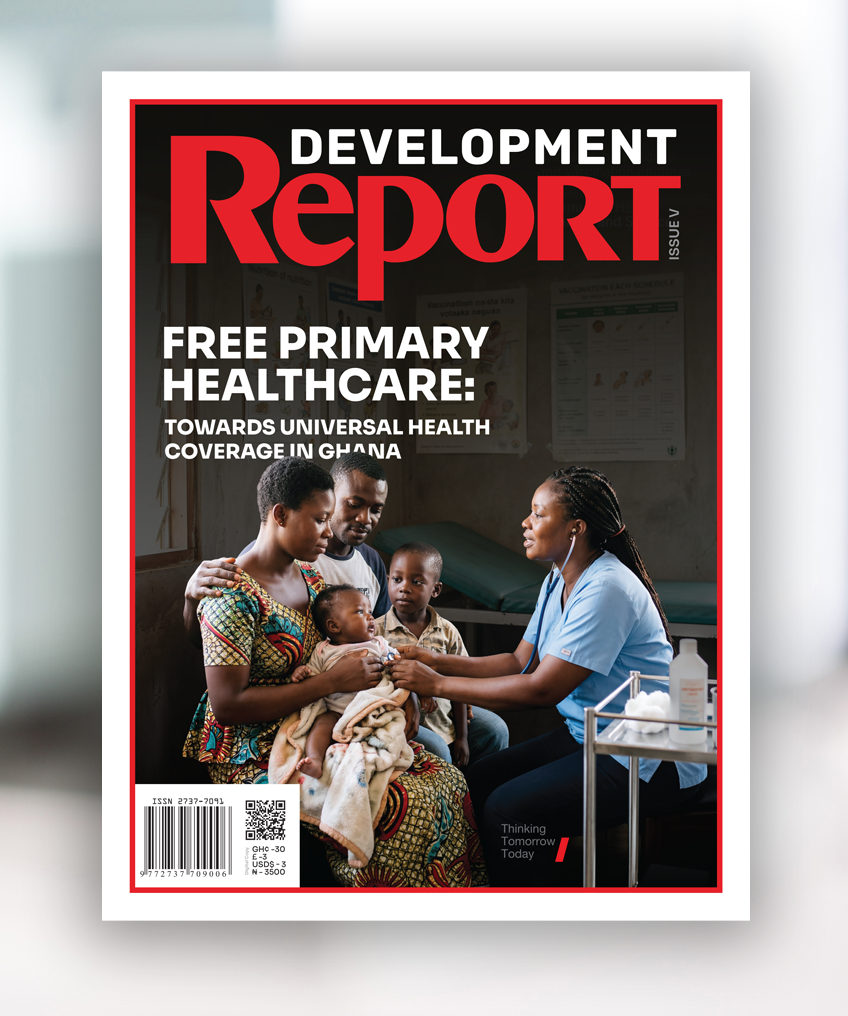
Now comes the current NDC administration’s most ambitious health pledge. On 30 March 2026, President Mahama announced that the Free Primary Health Care Programme would launch on 15 April 2026, targeting the estimated 35 per cent of Ghanaians still outside the NHIS. That is now barely a week away. Over 24,000 pieces of medical equipment is said to been procured. The 2026 budget allocated GH¢34 billion to the health sector, including GH¢11 billion for the NHIS. You can feel the ambition pulsing through the veins of government.
But consider the katanomic precedent. Ghana has, within living memory, traversed this exact arc before: free post-independence care collapsed into user fees; user fees spawned Cash and Carry; Cash and Carry provoked the NHIS; the NHIS developed a sustainability crisis; and now a fresh promise of free primary care is layered on top of an unreformed insurance substrate. Indeed, according to some scholars, in referring to the daily experience of many Ghanaians, the country has already gone full circle back to Cash & Carry.
Each iteration of national crisis generated enormous political capital and genuine short-term gains, yet the systemic learning – what katanomists call the norm-progression from political spectacle through policy refinement, legal enforcement, and constitutional embedding – has remained stunted at every turn. All the trauma of failure is internalised in the system’s logic; it does not push towards real change.
How, for instance, will a blended payment model combining fee-for-service and population-based capitation function in CHPS compounds where a single community health officer serves hundreds of households scattered across a cocoa-farming hinterland with unreliable mobile connectivity for electronic claims? Research shows that Ghana’s CHPS initiative improved geographic access to primary health services more comprehensively than the NHIS improved financial access to those same services.
Layering a free-care promise atop an pseudo-insurance scheme that already struggles to reimburse existing providers risks creating a mirage of coverage -another katanomic hallmark – where the edifice looks complete from outside but the plumbing leaks at every joint.
“I have some herbs for that”: Twenty-Five Years of Knocking
If the NHIS saga illustrates katanomics along the axis of health financing, Ghana’s treatment of traditional medicine, the salvation of the likes of Maame Ama, reveals an equally devastating fracture along the axis of health service delivery. And the two failures, as we have already seen and shall see more of, are twin symptoms of a single disease.
Between sixty and eighty per cent of Ghanaians use traditional medicine, according to the WHO’s 2019 Global Report on Traditional and Complementary Medicine. The Traditional Medicine Practice Council’s register recorded approximately 25,000 herbal medicine providers as of 2009. The arithmetic ratio is thus roughly one practitioner for every 200 citizens. The doctor-to-population ratio, by contrast, hovers near 1:20,000. In rural areas, the herbalist is actually not, as city dwellers might think, the alternative. The herbalist is the health system.
To Ghana’s credit, its policy experts have known this for a long time. The Ghana Psychic and Traditional Healers Association was formed in 1961. The Centre for Scientific Research into Plant Medicine (now the Centre for Plant Medicine Research) has operated since 1975. In 2000, Parliament passed the Traditional Medicine Practice Act (Act 575), creating the TMPC to register practitioners and regulate herbal preparation. In 2001, KNUST launched a four-year BSc in Herbal Medicine. In doing so, it created the first university-level herbal medicine degree in West Africa. By 2012, government formally approved integration into the national healthcare system. Fifty-five government hospitals now host herbal medicine units.
And yet. As of April 2026, traditional medicine services remain excluded from NHIS reimbursement. A citizen consulting a medical herbalist at one of those fifty-five hospital units pays entirely out of pocket. A 2016 case study that assessed a prominent Accra herbal hospital against NHIS accreditation standards found it scored 83 per cent overall (a stunning Grade A) yet failed dismally on in-patient care with a Grade E. The researchers concluded that outpatient herbal services could feasibly be brought under NHIS coverage, but that investment in infrastructure and standardisation was needed. The finding was nuanced, actionable, and promptly buried. Too much work to weave through in a shallow system.
Here is the katanomic fracture prising open the bones of the matter. Politics aggregated the vision – integrate traditional medicine! – and scored its rhetorical points. Policy demanded disaggregation: standardisation protocols (roughly half of herbal products analysed by the Centre for Plant Medicine Research in 2021 failed quality control, mostly from microbial contamination), pharmacovigilance architecture, tariff structures for herbal consultations, accreditation criteria for practitioner premises, and resolution of the fractious internal politics of practitioner associations. Yet nobody sustained the pressure long enough for any of these gears to mesh. The society simply lacks policy stamina.
Seventy Years of Chinese Policy Stamina
Lest this seem an inherently intractable problem, consider what China achieved by treating traditional medicine integration as a matter of existential state capacity rather than decorative policy.
Beginning in the 1950s, China built TCM university and hospital networks; through the 1980s and 2000s, it erected legal, economic, and scientific foundations; and from 2011, it consolidated clinical evidence through interdisciplinary collaboration. By 2015, China had 3,966 TCM hospitals, 452,000 practitioners, and 42 dedicated higher-learning institutions enrolling 752,000 students. The traditional Chinese medicine pharmaceutical industry generated RMB 786.6 billion that year. If that number means nothing on the surface, well, it is 28.55 per cent of the nation’s entire pharmaceutical output.
TCM is covered by government and commercial health insurance. In 2023, a Chinese patent medicine called Tongxinluo became the first ever to publish results in JAMA from a 3,797-patient randomised controlled trial, demonstrating a 36 per cent reduction in major cardiac events.
India mirrors this, if a bit differently. Its AYUSH system counts 771,468 registered practitioners as of 2016, with services reimbursed by public and private insurance.
What separates these trajectories from Ghana’s is precisely what katanomics identifies: policy stamina across the full norm-progression chain. China did not merely pass a law recognising TCM and then wait for things to happen. It built institutions, funded research pipelines, standardised pharmacopoeias, wove TCM into medical school curricula, created insurance reimbursement codes, and – critically – sustained these efforts across decades and leadership transitions. When problems surfaced (quality scandals, adverse event gaps), the system adjusted. Failures triggered learning. The chain from politics through policy, law, and institutional embedding remained coupled. China’s policy stamina, despite massive political upheavals across the decade, has been sustained because a growing critical policy audience offers the continuity and scrutiny needed by way of professional bodies, scholar communes, think tank advocates, and industry collaboratives.
Ghana, by contrast, built the scaffolding – TMPC, CPMR, TAMD, and KNUST’s herbal medicine programme, among others, then starved it of oxygen. As of the WHO’s 2019 global report, Ghana had no government or public research funding for traditional and complementary medicine. Practitioner registration was strangled by understaffing, cumbersome procedures, and fees high enough to breed charlatans. The very institutions that could have generated the evidence base for NHIS accreditation were left to wither on the vine.
Two Failures Converge to Reveal the Crux of the Matter
By this point we can safely deduce that Ghana’s NHIS sustainability crisis and its stalled traditional medicine integration are not two separate policy failures. They are twin symptoms of the same katanomic disease, and each holds part of the cure for the other.
Think about it. The NHIS haemorrhages money partly because it reimburses expensive curative services at hospital level whilst neglecting cheaper preventive and primary care. Traditional medicine already reaches the populations the NHIS struggles to cover. I.e. the rural poor, the informal sector, and communities where the nearest formal clinic is hours away. Bringing accredited herbal outpatient services into the NHIS would simultaneously expand the scheme’s effective coverage (without building new brick-and-mortar facilities), lower out-of-pocket spending for the seventy per cent who already use herbal care anyway, and create an institutional incentive for quality improvement among practitioners hungry for insurance revenue. In a single stroke, it would partially relieve the NHIS’s fiscal pressure by shifting demand from high-cost hospital encounters to lower-cost community-level herbal consultations, which is precisely the kind of primary-care strengthening that the new Free Primary Healthcare Programme claims to pursue.
But making this connection requires exactly the kind of cross-domain policy thinking that katanomic systems systematically fail to produce. Health financing specialists do not routinely speak to herbal medicine regulators. Parliamentary committees on health rarely interrogate the TMPC’s work plan. Journalists covering the NHIS deficit never explore whether a cheaper, herbal-inclusive benefit package might ease the fiscal bleed. Each silo rehearses its own crisis in isolation, its solutions announced to applause and abandoned without audit. The policy prism refracts the light into its component colours; nobody undertakes the labour of reassembly.
Mending the Chain Before the Next Fracture
Ghana has now cycled through four major healthcare access paradigms in seven decades: free post-independence care, user fees, Cash and Carry, and the NHIS. A fifth now bubbles into the mix: Free Primary Healthcare. Inauguration in just over a week is being planned as these words are written. Each paradigm arrives trailing clouds of political glory. Each can be justified in isolation, on its own terms. Yet, as katanomics predicts, none generates the systemic learning that would have prevented its successor’s birth.
Escaping this loop demands the cultivation of critical policy audiences: cadres of citizens, professionals, and institutions capable of sustaining technically literate pressure on the granular mechanics of implementation long after the cameras have left the launch ceremony. For Ghana’s health sector, that means pharmacists and medical herbalists jointly scrutinising NHIS accreditation criteria; it means journalists who can read an actuarial projection with the same fluency with which they quote a minister; and it means a philanthropic class willing to bankroll the unglamorous work of evidence generation and policy tracking becoming, borrowing a term from Renaissance history, “Patrons of Rigour.”
Concretely, it means piloting NHIS coverage for outpatient herbal services at the fifty-five government hospitals already hosting herbal units. A controlled experiment generating real claims data and stress-testing quality protocols. It means updating the NHIS tariff schedule to include herbal consultation codes. And it means subjecting the incoming Free Primary Healthcare Programme to the same forensic scrutiny that the World Bank applied to the NHIS in 2017: who is paying, for what services, through which channels, and with which safeguards against the adverse selection and provider gaming that nearly sank the insurance scheme?
Without this scrutiny, Ghana risks adding another stratum to its archaeological record of well-intentioned policy fossils. Cash and Carry’s bones lie alongside the NHIS’s creaking joints and the traditional medicine integration plan’s dusty files. Somewhere between the herbalist’s compound and the Minister’s podium lies a gap that no quantity of procured equipment can bridge.
Katanomics offers Ghana’s health sector a mirror, and what it reflects is disconcerting but, thankfully, clarifying. A country can build institutions, pass laws, print policy documents, and procure 24,000 pieces of medical equipment. But if it still fail to learn from its own history, policy failure is assured. But if the problem is a broken learning chain rather than a cursed destiny, the cure can’t be totally elusive. We can work to better couple promise to design, design to policy, and laws to institutional memory.
Maame Amqa is waiting. She has been waiting, through five paradigms, for the state to do the boring, painstaking work of actually finishing what it starts.
If it ever does, she might just renew that NHIS card.

Author: Bright Simons
Thinker and Development Activist