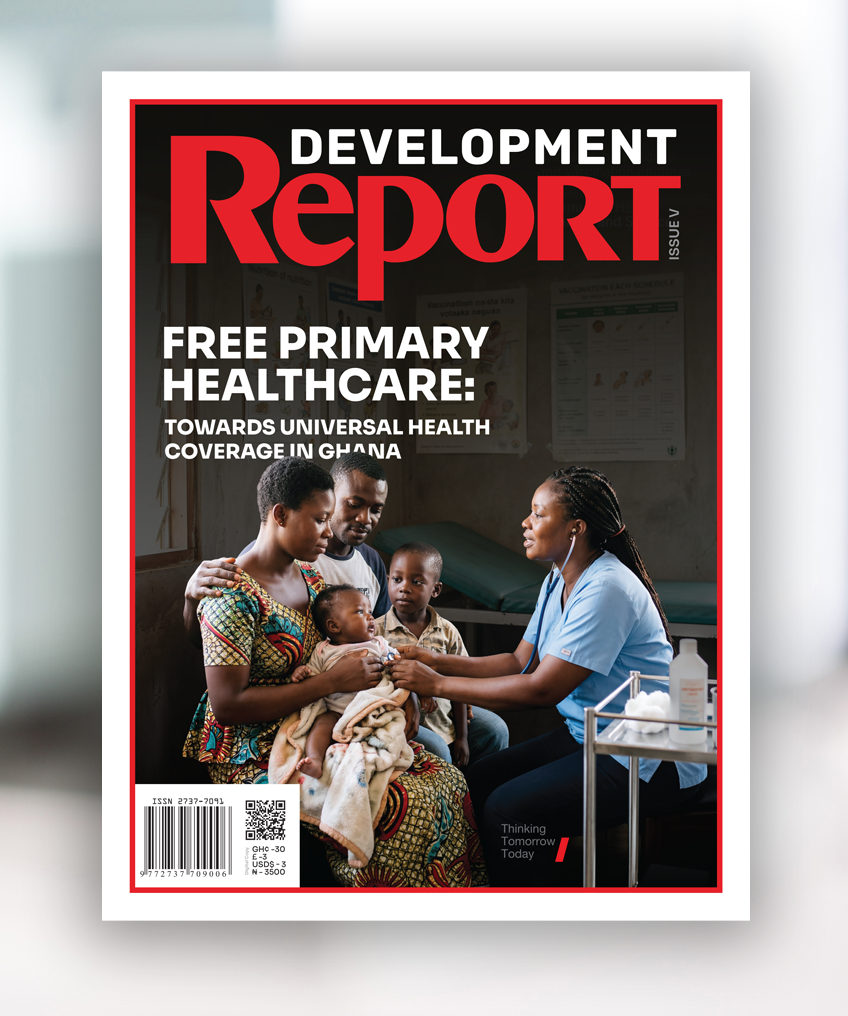
President John Dramani Mahama has officially launched the Free Primary Healthcare Programme, describing it as a critical pillar in Ghana’s journey toward Universal Health Coverage.
Speaking at the programme roll-out on Wednesday at the Shai-Osudoku District Hospital, a facility he commissioned ten years ago and which has since gained international acclaim for zero maternal mortality, Mahama said the new policy is designed to ensure that no Ghanaian is denied basic medical attention due to the cost of care.
The Free Primary Healthcare Programme, which will initially be rolled out in 150 underserved districts before expanding nationwide by 2028, aims to bridge the gaps left by the National Health Insurance Scheme (NHIS). While the NHIS has expanded access, Mahama noted that rural and underserved areas still face significant hurdles.
“The Free Primary Healthcare policy complements the NHIS; it does not replace it,” Mahama clarified. “By extending services to the grassroots level, we are moving the focus from purely curative care to preventive care. We want to catch illnesses before they become life-threatening.”
A major driver behind the initiative is the rising burden of non-communicable diseases (NCDs) such as hypertension, diabetes, stroke, and renal failure. President Mahama said lifestyle changes have led to an increase in these conditions. Consequently, the programme introduces a mandatory annual health screening for all Ghanaians.
With the support of traditional and religious leaders, the policy aims to mobilise communities to conduct regular checks of blood sugar and blood pressure.
“Early detection allows for simple lifestyle and dietary changes,” the president stated, adding that the policy includes a robust educational component to discourage unhealthy habits, such as late-night heavy meals and physical inactivity.
For those facing the most severe health challenges, such as kidney failure, the President announced that the “Ghana Medical Trust Fund,” also known as Mahama Cares, will provide an additional layer of support, offering free specialised treatments like dialysis, ensuring that the impact of the programme reaches from the simplest malaria case to the most complex medical needs.